
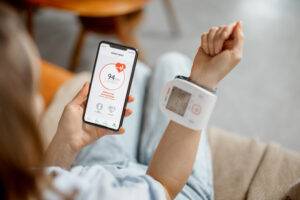



Geriatric assessment (GA) is underused in oncology because clinic-based implementation is time- and resource-intensive, limiting routine evaluation of frailty and treatment tolerance. Existing digital tools often rely on proprietary devices and closed analytic pipelines. We developed the Geriatric Remote Initiative (GeRI), an open-source platform integrating a wrist-worn accelerometer, smart scale, and tablet interface with reproducible analytics and triggerable surveys. GeRI was evaluated in a 12-week home deployment among 10 men aged ≥65 years receiving androgen deprivation therapy for prostate cancer. Self-rated health and symptom surveys triggered 48-h accelerometry windows, initiated by pressing “Start monitoring” on the watch. Engagement was defined a priori as completion of ≥50% of prompted interactions (surveys, scale readings, and watch session initiation) within each 4-week block; prespecified engagement was met by 9/10 participants in all three blocks. Usability was assessed using the System Usability Scale (range 57.5–100; 8/10 ≥ 75). Across the first three 4-week blocks, survey and scale completion was high (86%–87% and 83%) while watch session initiation occurred in 65% of prompts. Initiated windows could contribute up to 80 recoverable 24-h intervals; 43 met validity criteria (≤1.5 h non-wear and ≥300 steps/day), and one participant contributed 0 valid intervals despite initiating all watch prompts due to non-wear. Candidate frailty-aligned metrics included steps (inactivity), cadence (slowness), longest walking bout (endurance), and activity intensity. Exploratory analyses suggested that comorbidity and polypharmacy aligned with lower activity and higher quality of life with greater intensity. GeRI’s open-source architecture supports GA-aligned home monitoring and motivates refinements to improve data yield.
Implementing AI innovation in radiology departments in the English NHS: a qualitative study on the experiences of professionals, patient groups and innovators
IntroductionDigital solutions and Artificial Intelligence (AI) innovations are often presented as the answer to many challenges faced by healthcare systems around the world. The UK