
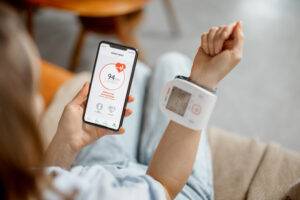


BackgroundKenya faces significant challenges in providing adequate access to maternal, newborn, and child health services, particularly in remote and underserved areas. Limited infrastructure, healthcare worker shortages, and financial constraints hinder access to timely, essential care. As health systems continue to face increasing demands, Telehealth solutions offer a promising approach to bridging geographical gaps and improving access to timely and essential healthcare services. By leveraging technology, telehealth can connect patients in remote areas with healthcare providers, enabling virtual consultations, remote monitoring, and timely interventions.AimThis study evaluated the “Better Data for Better Decisions: Telehealth” initiative, funded by The Children’s Investment Fund Foundation (CIFF) and implemented by Living Goods and in partnership with Health X Africa. The innovation aimed to integrate telehealth into the Community Health Promoter framework to improve MNCH outcomes, focusing on antenatal and postnatal care. The specific objectives included increasing uptake of antenatal and postnatal care, improving the efficiency of primary healthcare delivery, and influencing relevant policies.SettingThe study was conducted in Teso North, Busia County, Kenya, targeting ten community health units.MethodA mixed-methods quasi-experimental design was employed, incorporating key informant interviews, focus group discussions, and routine health record reviews. Data collection involved desk reviews, field data collection, and virtual data collection across three phases. Quantitative data were analyzed in Stata® 15 and R 4.5.1 using descriptive, inferential, and GEE models, while qualitative data were coded and analyzed in Dedoose using a constant comparative method.ResultThe project exceeded its registration targets, enrolling 388 households and 551 clients. Of the registered clients, 50% engaged in consultations with Health X doctors via the hotline, which emerged as the most preferred service channel, used by approximately 88% of Telehealth platform users. The intervention positively impacted the frequency of postnatal care (PNC) touchpoints and identified at-risk women based on nutritional indicators. The average number of PNC visits within six weeks postpartum was significantly higher in the intervention sites (mean: 4.99 visits) compared to control units (mean: 3.96 visits; p = 0.003). The big wins for impact were identifying and escalating care, including completion of referrals for dangers signed in newborns, supporting positive behaviour change and improving access to clinical care in the last mile.ConclusionIntegrating telemedicine into the CHW framework shows promise for improving access to and engagement with postnatal care services in underserved areas of Kenya. The hybrid model, combining virtual consultations with community-based CHW support, effectively leveraged technology and existing health infrastructure. Further research is needed to assess the impact on healthcare efficiency and policy influence fully. These findings present a compelling case for policymakers to scale telehealth as a core element of Kenya’s MNCH strategy. Part of the work led to supporting the MOH in developing Telemedicine Policy and Guidelines for Kenya.

Epistemic and ethical limits of large language models in evidence-based medicine: from knowledge to judgment
BackgroundThe rapid evolution of general large language models (LLMs) provides a promising framework for integrating artificial intelligence into medical practice. While these models are capable