




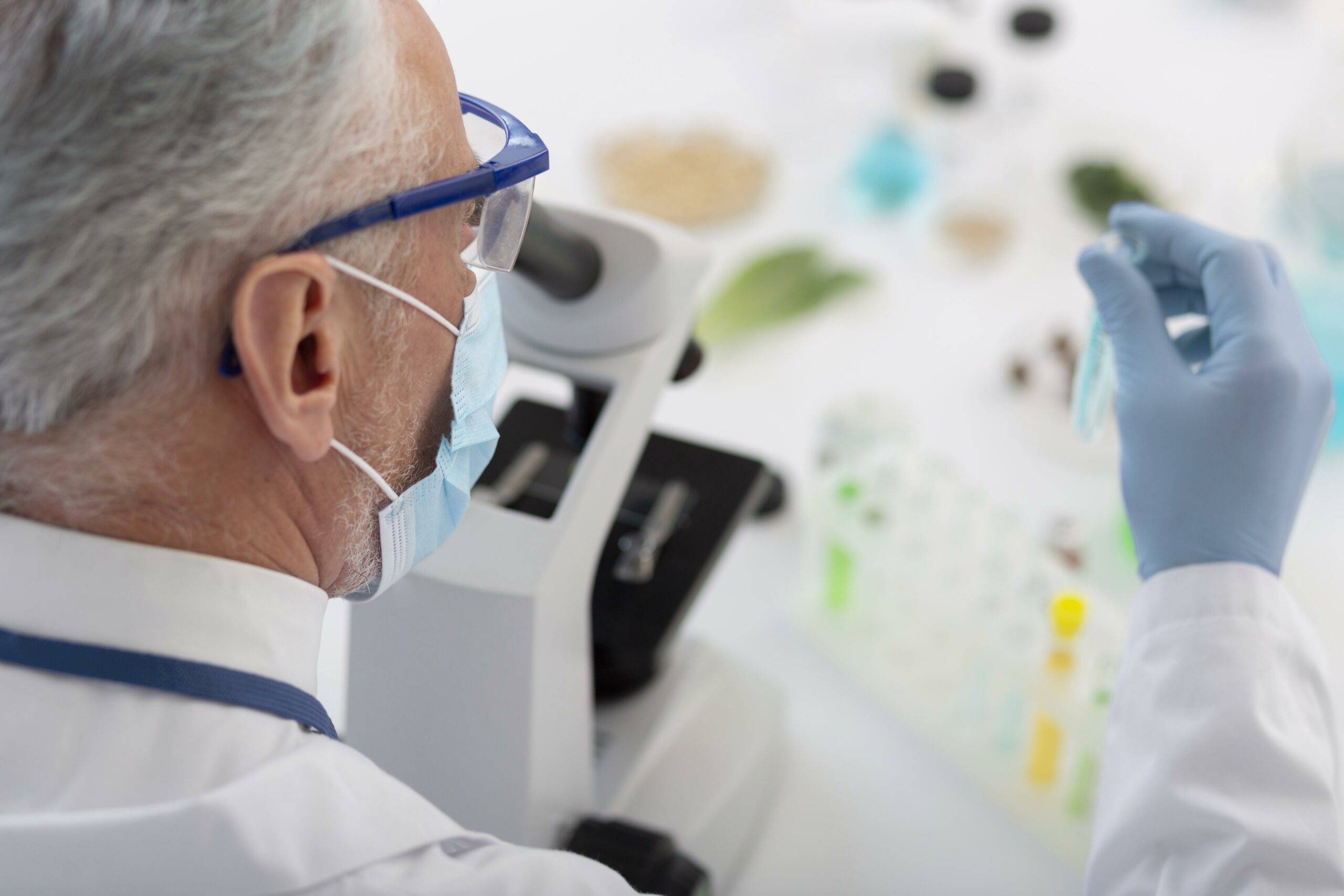
TAR DNA-binding protein 43 (TDP-43) is a prion-like RNA-binding protein that plays a key role in amyotrophic lateral sclerosis and frontotemporal dementia. Producing full-length TDP-43 consistently is thus relevant for its in vitro studies and yet it remains challenging, especially with the current requirement to work under biosafety level-2 (BSL-2) containment due to new safety regulations for Prion-like and amyloidogenic proteins. Here we describe a refolding-assisted purification protocol for TDP-43 from soluble fraction that can be implemented with basic equipment in standard BSL-2 laboratories. Expression in Escherichia coli is followed by IMAC-capture on an EDTA/DTT-tolerant Ni-NTA resin under 4 M urea, then on-column refolding via a gradient urea wash using resin-limiting conditions that favour the binding to high-affinity His-tagged protein. After SUMO solubility tag removal, the preparation is monitored by a robust quality-control pipeline: SDS-PAGE and immunoblotting for integrity and purity, mass photometry for oligomeric state, far-UV circular dichroism for secondary structure, fluorescence anisotropy for native functional assays, and light-scattering for stability and aggregation propensity measurements. A concise BSL-2 standard operating procedure specifies containment, decontamination, and waste handling for prion-like proteins. This protocol enables safe, cost-effective, and reproducible access to native-like full-length TDP-43 and is readily adaptable to other prion-like aggregation-prone proteins.

Scaling Causal Mediation for Complex Systems: A Framework for Root Cause Analysis
arXiv:2512.14764v1 Announce Type: cross Abstract: Modern operational systems ranging from logistics and cloud infrastructure to industrial IoT, are governed by complex, interdependent processes. Understanding how