



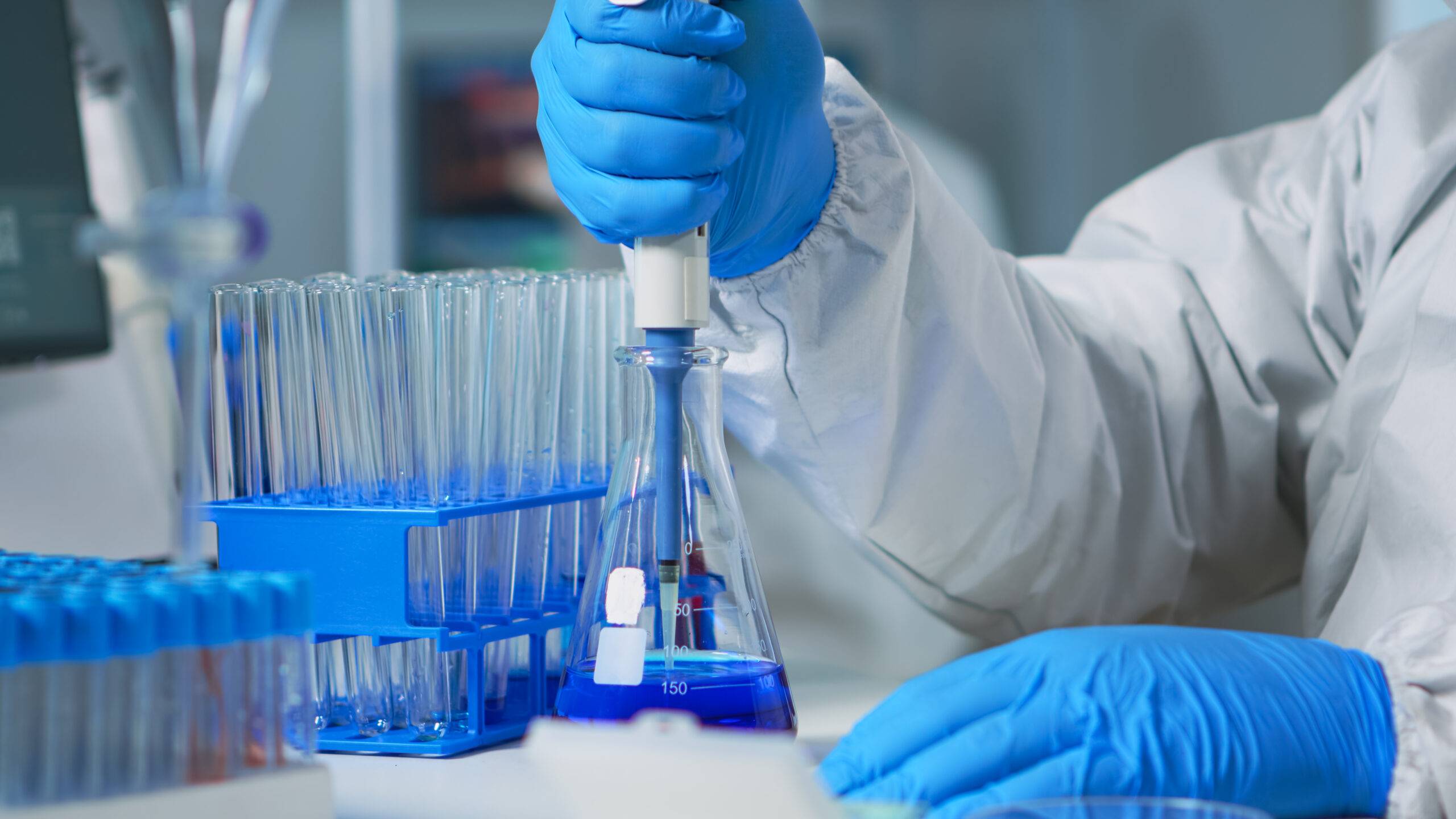
Droplet microfluidic screening systems enable high-throughput, labor-saving enzyme directed evolution by employing fluorescence, absorbance, and Raman-activated sorting strategies for library screening. Forster resonance energy transfer (FRET) – a nanoscale technique for monitoring intramolecular/intermolecular conformational changes – is yet to be integrated into this process. We upgraded a single-channel sorter to a dual-channel one without redesigning the microscopy setup, which can monitor FRET signals during enzyme reactions in droplets at kilohertz rates. We applied this upgraded sorter to improve the incorporation efficiency of KOD DNA polymerase towards reversible terminator deoxyribonucleotides, a property crucial for its application in next-generation sequencing (NGS). Our data show that a single-round sorting can achieve 30-fold enrichment of active variants. Five KOD variants enabling 100-cycle single-end runs of DNA sequencing were identified using a novel cyclic reversible termination (CRT) substrate featuring a terminator group approx 5-fold bulkier than the classical azidomethyl moiety. We also engineered a metagenome-derived novel polymerase, and a variant achieving 90% terminator incorporation efficiency within 2 minutes was identified after two rounds of enrichment. In sum, we provide a practical setup for dual-channel FRET-based droplet sorting, and demonstrate its ability in terminator polymerases engineering, thereby broaden the scope of microfluidic applications.

Magnetoencephalography reveals adaptive neural reorganization maintaining lexical-semantic proficiency in healthy aging
Although semantic cognition remains behaviorally stable with age, neuroimaging studies report age-related alterations in response to semantic context. We aimed to reconcile these inconsistent findings