


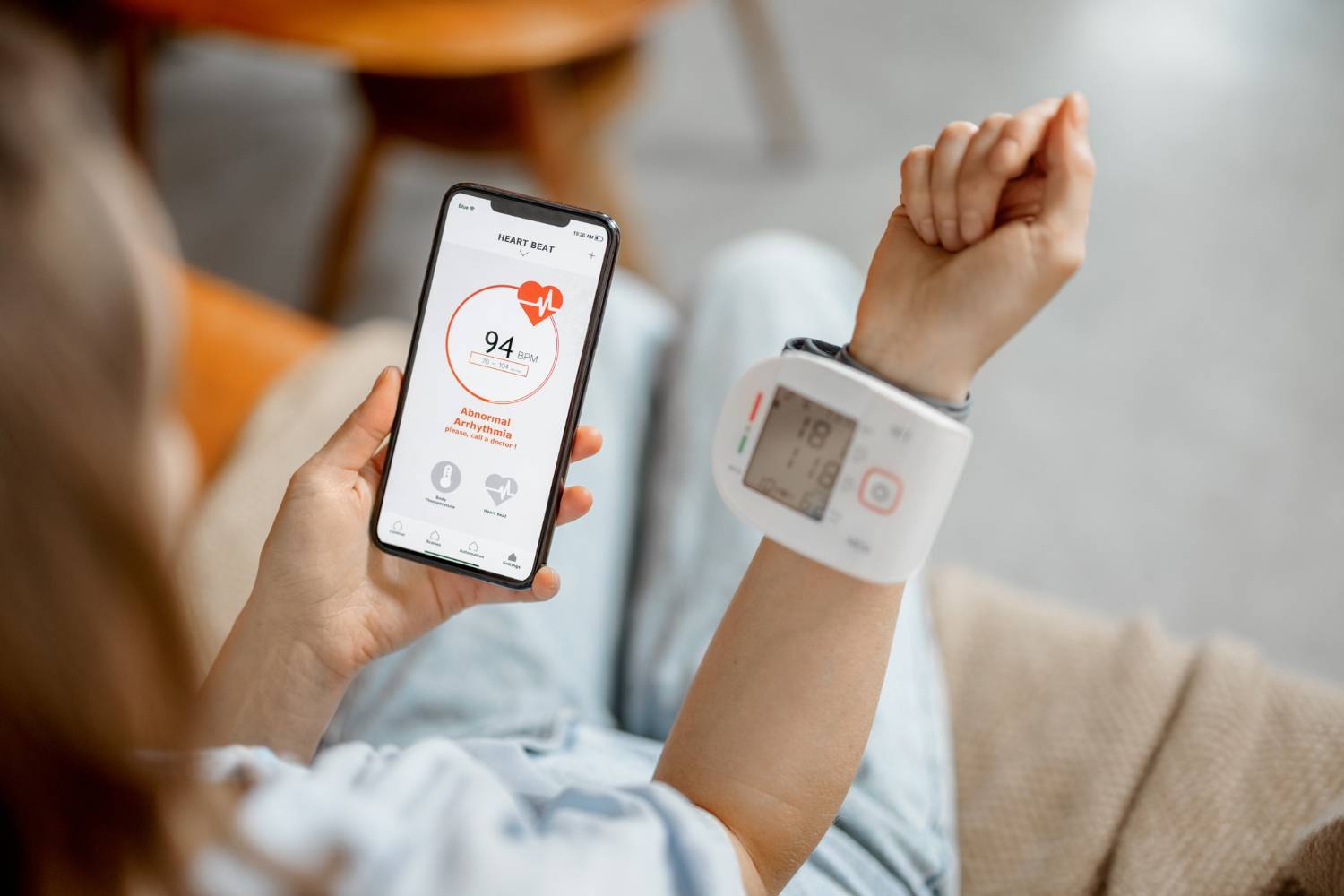
IntroductionHuman Activity Recognition (HAR) using sensor-generated time-series data has gained significant attention for assessing mental and physical states to address various behavioral disorders. This study utilizes benchmark datasets of stress-related activities to improve prediction performance.MethodsTo achieve this, we employ multiple deep learning architectures, including Recurrent Neural Networks (RNNs), Long Short-Term Memory (LSTM) networks, and Transformer models, for feature extraction and classification. Comprehensive experiments are conducted to evaluate model performance, with particular focus on the impact of window size and overlap ratio on classification accuracy.ResultsThe experimental results demonstrate that Transformer models outperform LSTM and RNN models, achieving classification accuracies of 97.83%, 97.36%, and 92.4% on the test dataset, respectively. Furthermore, the proposed approach shows a significant improvement over the deep neural network reported in the original Stressense dataset study.DiscussionThese findings highlight the effectiveness of Transformer-based architectures for HAR tasks involving stress detection. The improvement in classification performance suggests strong potential for advancing seamless mental health monitoring using non-intrusive wearable devices.
Assessing perceived needs for telepathology implementation in Colombia: a baseline study from Red GLORIA
BackgroundCancer diagnosis in Colombia faces delays and regional inequities, particularly in rural and underserved areas where access to subspecialist pathology is limited. General pathologists in