

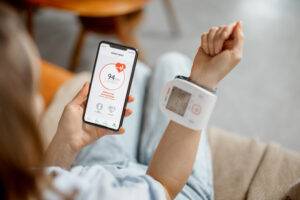

BackgroundNurses frequently endure diminished sleep quality, sleeplessness, and psychological distress due to high-intensity shifts and persistent work pressure. Digital health interventions are increasingly utilised to enhance sleep behaviour; however, systematic information about their real benefits on the nursing population remains insufficient.ObjectiveTo assess the efficacy of digital and mobile interventions on sleep and associated psychological consequences in nurses.MethodsThis review adhered to Cochrane principles and PRISMA standards. A multitude of databases were examined, including PubMed, Web of Science, the Cochrane Library, Embase, Scopus, and EBSCO. Two reviewers conducted study screening and quality assessment independently. The primary outcomes were the Pittsburgh Sleep Quality Index (PSQI), Insomnia Severity Index (ISI), and Epworth Sleepiness Scale (ESS). The statistical analysis was conducted using RevMan 5.4 software. Continuous outcome variables were aggregated using standardised mean differences (SMD), mean differences (MD), and 95% confidence intervals (CI).ResultsEleven studies comprising 2,321 nurses were included. Digital interventions markedly enhanced sleep quality (PSQI: MD = −2.94, 95% CI −5.22 to −0.66) and reduced insomnia severity (ISI: MD = −3.32, 95% CI −5.19 to −1.45). A significant disparity was also noted in daytime sleepiness (ESS), with reduced scores in the intervention group. The interventions also diminished depression (SMD = −0.46, 95% CI −0.80 to −0.13), anxiety (SMD = −0.29, 95% CI −0.44 to −0.14), and fatigue (SMD = −0.41, 95% CI −0.75 to −0.07), while no significant effect was found for work-related stress.ConclusionDigital and mobile-based interventions seem to enhance sleep quality and psychological well-being in nurses. Nonetheless, due to the significant variability and the restricted number of studies, additional high-quality trials are required to validate these findings.

The MediVoice implementation journey: ambient artificial intelligence for clinical documentation
Healthcare systems are increasingly turning to ambient Artificial Intelligence (AI) scribes to reduce documentation burden and lighten clinicians’ cognitive load. In this brief research report,