npj Digital Medicine, Published online: 06 April 2026; doi:10.1038/s41746-026-02600-x
Towards a physics informed digital twin to predict cerebral blood flow and cerebral vascular regulation

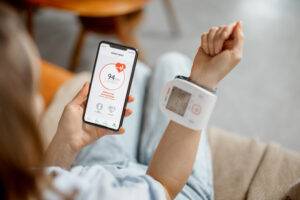
BackgroundHospital at home (HAH) services within the UK have expanded rapidly over the last 5 years, but there is comparatively little evidence demonstrating their clinical

IntroductionDesigning digital health solutions for critical environments like intensive care units (ICUs) is challenging, especially in resource-constrained settings. The integration of user experience (UX) design
ObjectivesThe transition from paper medical records to electronic health records (EHRs) has enabled the extraction of substantial real-world data, which can support future real-world evidence

Artificial intelligence (AI) chatbots powered by large language models (LLMs) such as ChatGPT offer a promising approach for delivering scalable, personalized physical activity interventions. Despite